
Supplier sourcing
We identify manufacturers that meet your technical and commercial criteria.
Sourcing · Suppliers · Procurement
Turn your requirement into a structured supplier search. We audit each supplier according to clear criteria: product, materials, dimensions, quantities, packaging and lead times.
SINOROADLINK organises the specifications, offer analysis, sampling, production follow-up and control before final approval for you.
We identify manufacturers that meet your technical and commercial criteria.
We define prices, MOQs, lead times and packaging conditions with each selected supplier.
We validate appearance, dimensions and operation before any production launch.
We coordinate each stage, from order launch to shipment.
We organise checks according to the criteria defined in advance.
We support your private-label, OEM and ODM projects.
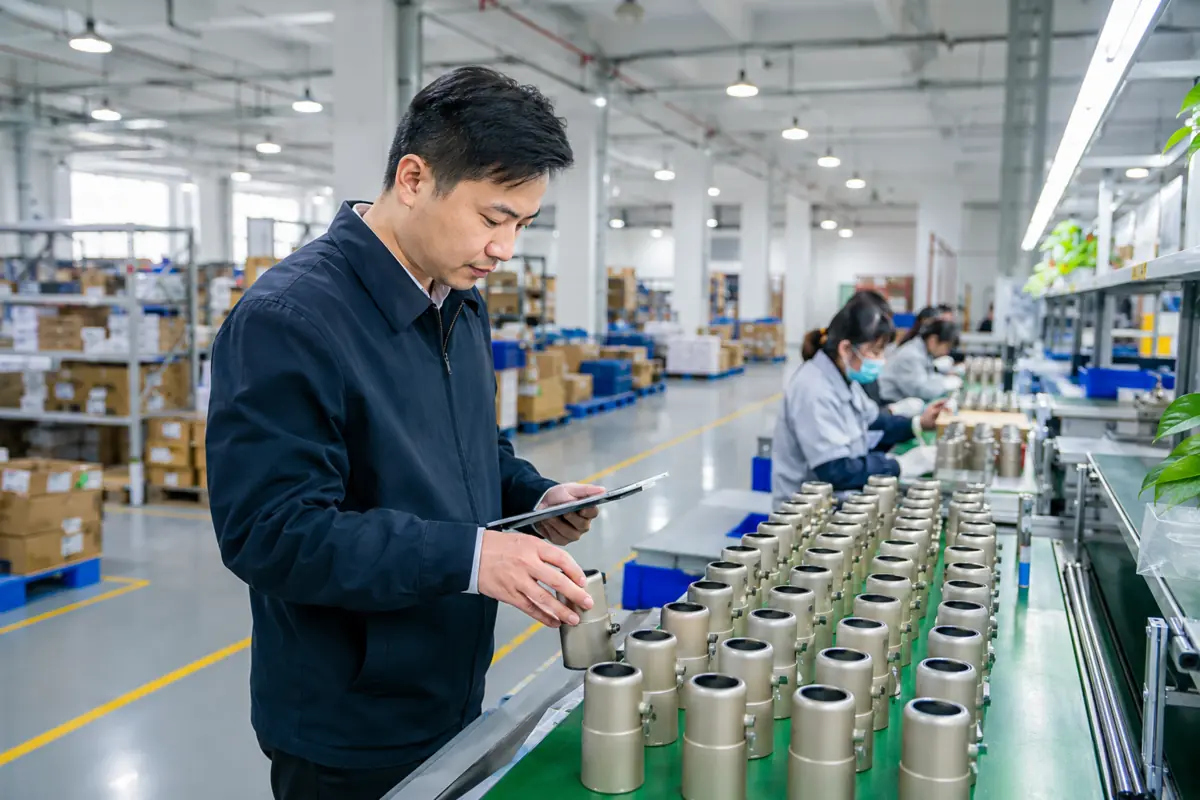
Sourcing method
The first step is to translate your idea into usable criteria: use, specifications, materials, finishes, target quantity, packaging and lead-time expectations. This framework reduces irrelevant responses and directs supplier sourcing in China towards the relevant profiles.
The shortlisted manufacturers are then assessed on a common basis. This method makes it possible to compare similar offers and identify differences in product, MOQ or commercial conditions.
Price isn’t everything. When evaluating a supplier, their ability to answer your questions clearly, their responsiveness, and the quality of their communication are equally important. These factors provide valuable insight into their professionalism, reliability, and ability to build a long-term business relationship.
Qualification takes place before any purchasing decision. Its purpose is to verify consistency between the information available about the supplier, its export experience, the match between its activity and the product sought, and its command of manufacturing.
When the project justifies it, a more extensive verification can be organised — for example according to the ISO 9001 standard — to complete the analysis.
This examination clarifies the information before committing to a supplier.
Documents declared by a manufacturer or provided during the assessment cannot alone constitute an on-site guarantee. Further checks according to the nature and value of the project remain the responsibility of the contracting party.
The final selection is based on a set of indicators: compliance with the specifications, consistency of the offer, communication ability, MOQ, production capacity and quality of commercial organisation.
Negotiation is not limited to the unit price. It must also cover MOQs, lead times, customisation options and payment terms.
The MOQ directly affects the committed budget and the volume of stock to absorb. The possibilities for negotiation on this point vary according to manufacturers, raw material, packaging and order schedule.
For a young brand, obtaining a more suitable order configuration can be more strategic than a small reduction in unit price — a point that we systematically integrate into our discussions with suppliers.
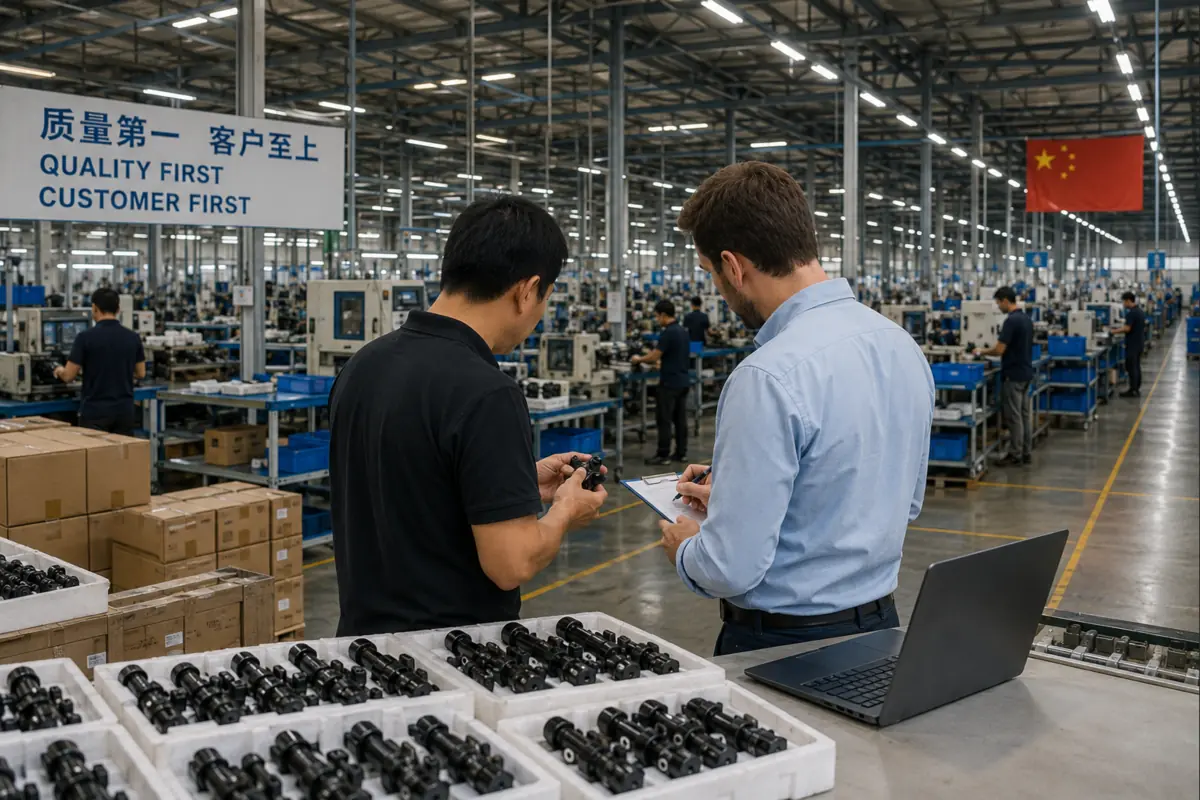
The sample remains a decisive stage before committing to production. It makes it possible to assess materials, dimensions, finishes, colours and packaging.
Discrepancies identified between the specifications and the sample presented remain the most frequent point of attention before launch. Rigorous approval at this stage greatly limits the risk of non-conformities being identified once the order has been launched.
After the sample has been approved, production follows a schedule agreed with the supplier. Regular progress updates make it possible to monitor the key manufacturing stages.
A quality control before shipment can be organised according to criteria defined in advance: product conformity, quantities, dimensions, finishes, packaging and visible details. This control makes it possible to identify discrepancies before the goods leave the supplier, before the organisation of international transport and customs clearance at destination.
A private label means securing your position with the Chinese manufacturer and avoiding any risk of unauthorised replication. The necessary capabilities are not limited to product development: they also concern the measures introduced to protect the brand, notably through the international registration of intellectual property rights, as recognised by WIPO, before starting production.
| Model | Principle | Customization | Best suited for |
|---|---|---|---|
| OEM | Manufacturing according to your specifications or product design | High | Brands with their own product or specific requirements |
| ODM | Adaptation of a product or model already developed by the manufacturer | Medium to high | Brands looking to accelerate product development |
| Private Label | Marketing an existing product under your own brand | Low to medium | Faster market entry with less product development |
The choice between OEM, ODM and private label depends in particular on the desired level of customization, budget, quantities and time to market.
The regulatory requirements specific to your destination market must be identified from the sourcing stage. They may concern materials, dimensions, finishes, labelling and documents to be provided by the manufacturer.
Identifying these criteria in advance avoids discovering a regulatory blockage once the order has been placed. Preparing your sourcing project, including these requirements, remains the best guarantee against unpleasant surprises.
To learn more about connecting with manufacturers on site, read our article about the Canton Fair and selecting suppliers in China.
Your sourcing journey
SINOROADLINK
Tell us about your product, quantities and objectives to start a suitable supplier search.